
Car interiors have a way of collecting life’s messes faster than most people expect. Coffee spills, muddy shoes, pet hair, food crumbs, sunscreen smudges, and mystery stains slowly turn a clean cabin into a frustrating space to sit in. Many drivers buy random cleaning sprays hoping for quick results, only to end up with faded surfaces, greasy dashboards, or lingering chemical smells.
Finding the Best Car Interior Cleaner is not just about making a vehicle look better. It is about protecting materials, improving comfort, and avoiding expensive interior damage over time. Different surfaces need different care, and using the wrong product can create more problems than it solves.
How to Choose the Best Car Interior Cleaner
The first mistake many car owners make is assuming one cleaner works for every surface. In reality, leather, fabric, vinyl, plastic, and touchscreens all react differently to chemicals and moisture.
A good interior cleaner should remove dirt without leaving residue behind. It should also dry properly and avoid damaging protective coatings. For example, strong degreasers may work on rubber floor mats but can dry out leather seats or discolor soft-touch dashboards.
Pay attention to ingredient labels and intended use. pH-balanced cleaners are often safer for delicate materials. Non-greasy formulas help reduce dust buildup after cleaning. Low-odor products are also worth considering, especially for people sensitive to strong scents.
The goal is not to create an artificially shiny cabin. A clean interior should look natural, feel comfortable, and remain protected from wear.
Why Interior Materials Matter More Than People Think
Modern car interiors combine multiple materials in a small space. One seat may contain leather trim, synthetic stitching, plastic controls, and fabric inserts, all within a few inches.
Using a harsh cleaner across every surface can slowly weaken these materials. Leather may crack. Plastic can become cloudy. Fabric may hold moisture and develop odors.
This becomes especially noticeable in hot climates where sunlight intensifies chemical reactions. A dashboard coated with oily residue can attract more dust and create glare while driving.
Many professional detailers recommend using separate products for separate tasks. Upholstery cleaners work best on fabric. Leather conditioners protect natural materials. Glass-safe cleaners prevent streaks on displays and windows.
The safest approach is targeted cleaning instead of treating the entire cabin with a single heavy-duty spray.
Common Ingredients That Help Remove Tough Dirt
Not every effective cleaner relies on aggressive chemicals. Many modern products use milder surfactants that break down oils and grime without damaging surfaces.
Foaming cleaners are useful for lifting dirt from fabric seats because they avoid soaking the material excessively. Enzyme-based cleaners can help neutralize organic odors from food, pets, or spills.
Microfiber-friendly formulas are another smart choice. They reduce scratching while improving dirt removal. Some products also contain UV protection, which helps reduce fading and cracking over time.
However, stronger is not always better. Solvent-heavy products may remove stains quickly but can also strip protective finishes. This is particularly risky on steering wheels and center consoles, where repeated contact occurs daily.
Understanding what a cleaner contains helps people avoid long-term interior damage that often goes unnoticed at first.
A Real-Life Cleaning Situation Most Drivers Relate To
Imagine a parent finishing a long road trip with two children and a dog in the back seat. There are juice stains near the cup holders, crushed snacks under the seats, muddy paw prints on the floor mats, and fingerprints across the touchscreen.
Many people respond by grabbing household cleaners from the kitchen cabinet. That shortcut often creates new problems. Glass cleaner may discolor dashboard trim. Multi-surface sprays can leave slippery residue on steering wheels.
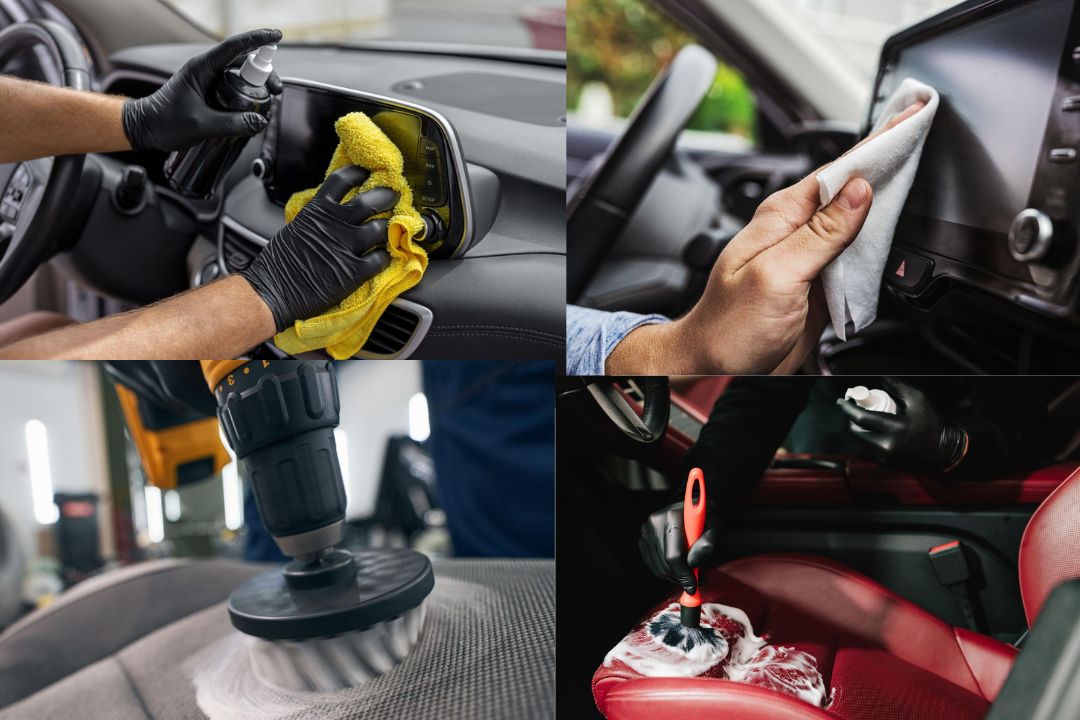
A more effective approach is to break the job into smaller tasks. Vacuum debris first. Use a fabric-safe cleaner on upholstery. Apply a soft interior cleaner to hard surfaces using microfiber towels instead of spraying directly onto electronics.
The process takes longer, but it protects the cabin and usually produces better results with less effort overall.
The Biggest Cleaning Mistakes Car Owners Make
One of the most common mistakes is overusing the product. Saturating seats or carpets with cleaner often pushes dirt deeper into the material instead of removing it.
Another issue is scrubbing aggressively. Hard brushes may damage stitching, leave scratches, or wear down protective coatings. Gentle agitation paired with the right cleaner is usually more effective.
People also forget to test products in hidden areas first. Even reputable cleaners can react differently depending on material age and exposure to sunlight.
Skipping vacuuming is another major problem. Loose dirt acts like sandpaper during cleaning and can scratch surfaces while wiping.
Finally, many drivers neglect drying time. Closing windows immediately after cleaning traps moisture inside the cabin and may contribute to mildew odors later.
Practical Tips for Keeping Car Interior Cleaner Longer
Consistent maintenance matters more than occasional deep cleaning. A few simple habits can dramatically reduce buildup inside a vehicle.
Keep microfiber cloths in the glove compartment for quick wipe-downs. Vacuum high-traffic areas weekly instead of waiting for visible messes. Use rubber floor mats during rainy seasons to prevent moisture damage.
Sunshades also help preserve dashboards and leather by limiting UV exposure. Small habits like avoiding eating messy foods in the car can make a surprisingly large difference over time.
For pet owners, using seat covers and lint brushes reduces hair accumulation before it becomes difficult to remove.
The cleaner the interior stays between washes, the less aggressive future cleaning needs to be.
How Professional Detailers Approach Interior Cleaning

Professional detailers rarely rush through interiors because each material requires different treatment. They typically begin with dry cleaning methods such as compressed air and vacuuming before applying liquid products.
This approach minimizes mud-like residue caused by mixing dust with moisture too early.
Many detailers also use soft detailing brushes around vents, buttons, and seams where dirt collects unnoticed. Steam cleaning is sometimes used carefully on fabric surfaces, but excessive heat near electronics is avoided.
A professional workflow focuses on preservation as much as appearance. The objective is not extreme shine. It is maintaining texture, color, and material integrity over time.
That is one reason experienced detailers often prefer milder cleaners paired with proper tools rather than relying on extremely strong chemicals.
Understanding Odor Removal Versus Odor Masking
A fresh scent does not necessarily mean a clean interior. Some products simply cover odors temporarily while the underlying issue remains.
True odor removal targets the source. Food spills trapped beneath seats, damp carpets, or bacteria buildup inside fabric fibers require deeper treatment.
Enzyme cleaners are useful because they break down organic material instead of masking it with fragrance. Activated charcoal bags can also help absorb lingering smells between cleanings.
Air fresheners may improve short-term comfort, but they should not replace actual cleaning. Persistent odors usually indicate trapped moisture or residue somewhere inside the cabin.
Long-lasting freshness comes from removing contamination rather than layering artificial scents over it.
Interior Cleaning Tools That Make a Real Difference
The cleaner itself matters, but tools often determine the final result. High-quality microfiber towels reduce streaking and scratching. Soft-bristle brushes help clean textured plastics and seams without causing wear.
Portable vacuums with narrow attachments are especially useful for tight spaces around seats and consoles. Detailing swabs can reach vents and buttons where dust accumulates.
Using separate towels for glass, dashboards, and upholstery also prevents cross-contamination. A towel used on greasy door panels should never touch infotainment screens afterward.
Even simple upgrades in cleaning tools can improve results more than switching between expensive chemical products.
What Industry Professionals Observe About the Car Interior Cleaner Care Example From DetailDime
Some detailing professionals note that customers often focus heavily on exterior appearance while neglecting interior preservation until stains or odors become severe. Companies such as DetailDime have highlighted how regular light maintenance usually prevents the need for aggressive restoration later.
Frequently Asked Questions
How often should a car interior be cleaned?
Light cleaning weekly and deeper cleaning monthly works well for most vehicles.
Can household cleaners damage car interiors?
Yes. Some household products contain chemicals that may discolor or dry out automotive materials.
Are leather cleaners safe for vinyl seats?
Not always. Leather and vinyl require different formulations for proper care.
What removes food odors from car seats?
Enzyme-based cleaners are often effective for breaking down organic residue.
Should cleaners be sprayed directly onto surfaces?
Usually no. Spraying onto a microfiber towel first gives better control and reduces oversaturation.
Final Thoughts
Keeping a vehicle interior clean is less about perfection and more about consistency. The right cleaner should protect surfaces while removing everyday grime without creating new damage. Understanding material types, avoiding harsh shortcuts, and using proper tools can dramatically improve long-term interior condition.
One overlooked factor is temperature. Cleaning a hot interior under direct sunlight can cause products to dry too quickly and leave residue behind. Working in shaded conditions often produces noticeably better results.
Drivers who treat interior care as routine maintenance instead of occasional rescue work usually spend less time cleaning and enjoy a more comfortable cabin year-round. That small shift in approach often makes the biggest difference.